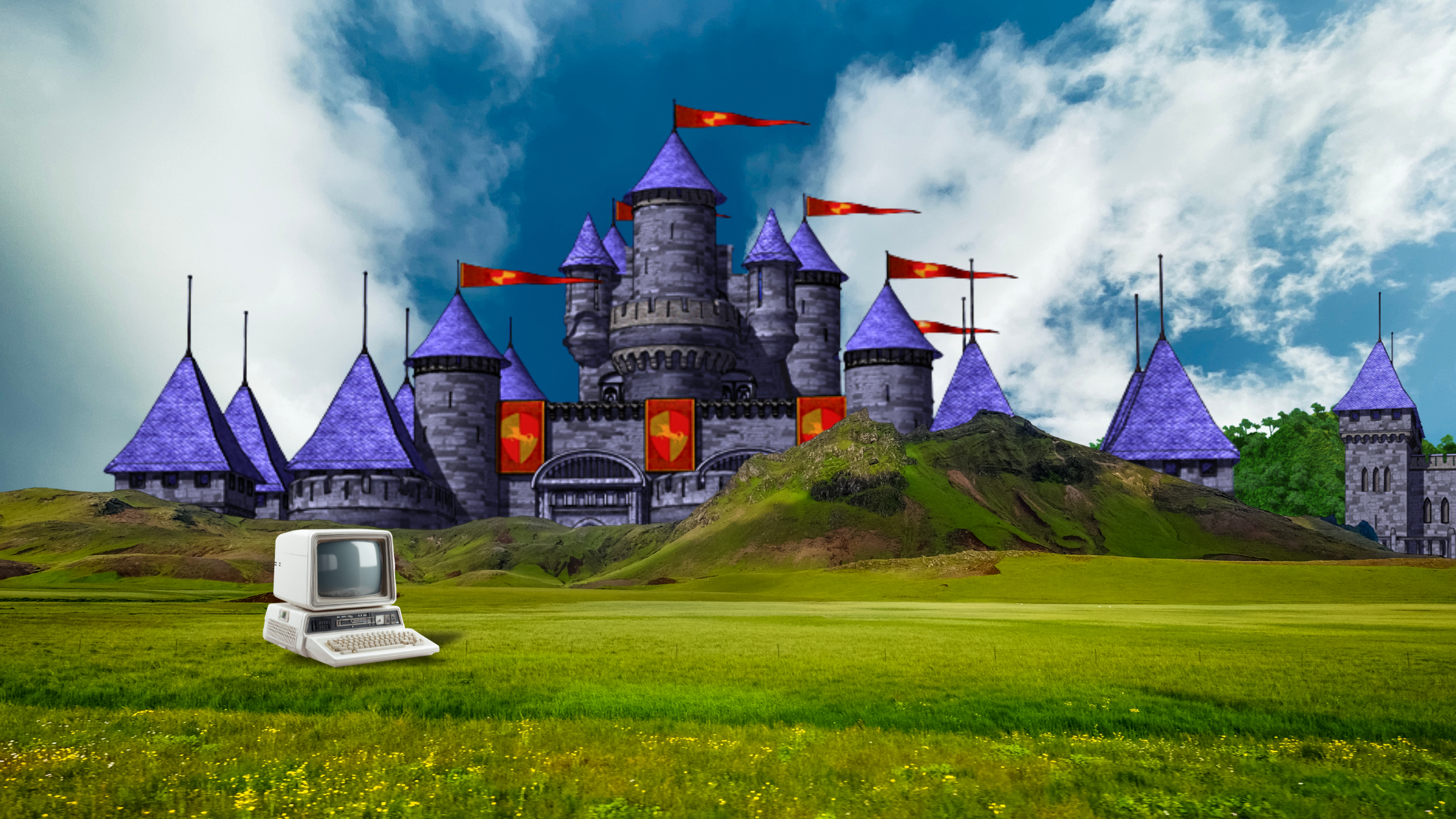
Relearning love for the digital world as a means of rebellion.
The allure of the internet
There is something in human nature that simply adores mysterious things. We are creatures of immeasurable intrigue, and when faced with the unknown, many of us will find ourselves unable to fully shake the “what-if” possibilities from our minds, no matter how mundane the true answer may be. It is that fascination that keeps people theory-crafting over the Jack the Ripper case, the Voynich Manuscript, and all manner of enrapturing loose threads the world has left us to tug upon.
For those of us who use online spaces for more than the basic work and social media tasks for which the entirety of Web2.0 has been curated, this sense should be quite familiar. Merely scratch the surface of the World Wide Web, and you will see an endless labyrinth of human innovation the likes of which haven’t been seen at any prior point in human history. After all, the internet is estimated to exceed 200 zettabytes of data (one zettabyte is equivalent to one trillion gigabytes), which is as close to endless as you can get.

The internet is always bigger than we think
Whilst we all use the internet in some capacity, I feel that this scope is rarely felt for the sheer magnitude that it entails. It is an archive of information spanning literature, art, philosophy, culture, scams, pornography, AI slop, beauty, bigotry, and everything in between spanning every conceivable medium and model of distribution that can be achieved through the medium of coding, and whilst the sands of this place are ever shifting, much of what came before still remains in one form or another. It is this fact that makes the act of digital archeology so fascinating, diving into the cultures and worlds that have risen and fallen in the sediment of online creation.
What is the Indie web (or small internet)?
The small internet, or indie web, has been gaining more prevalence since the late 2010s, but the actual utility of this trend really began to take shape over the past couple of years. As AI and large language models threaten to overtake practically every aspect of the mainstream web, this regression to Web1.0 sensibilities has felt less like nostalgia for a bygone era of techno-optimism and more like a stand against innovation for the sake of innovation and an acknowledgement of the ways in which those in charge of the internet’s major platforms do not share the vision or goals of those netizens who have made these spaces their home.
How capitalism impacts the web
Although the internet has always existed within the framework of capitalism, the ethos of online communities has, in large part, fostered a sentiment of anti-capitalist (dare I say, Communist) ideology regarding how the World Wide Web should be policed. Any push for censorship has been met with intense hostility from users, piracy and free sharing of media is par for the course no matter how many restrictions are put in place, and the more innovative and interesting software-based solutions to problems created by community members will generally be made open-source to be shared and expanded upon through sites like GitHub, trading out the profit incentive often assumed to be the default through a capitalist lens for a genuine sense of harmonious interpersonal support that has defined many online arenas.
None of this is to say that the internet is or has ever been a leftist utopia by any means. One only needs to look at the ways in which the above ideas of free expression and data sharing have been used by sites like 4Chan to harass and abuse on a grand scale to see that not all those who fight for personal freedom online have the best intentions. Nevertheless, whether it is a Libertarian alt-right community of internet Chuds complaining about feminists and trying to kickstart a Gamergate 2.0 (a very real, and very embarrassing thing that happened) or digital anarcho-socialists creating freeware alternatives to essential software services, this idealised concept of free expression and Net Neutrality is central to the digital landscape.
All of this is to say that there are certain lines that those with more than a passing interest in the digital landscape are generally unwilling to cross when it involves the dismantling of these online freedoms.
In a space where any personal project (including this very digital publication) will be used without informed consent to train an AI model so that it can more effectively take work from creatives and coders who made the internet what it was, one needs to ask oneself whether the future web this type of technology shall define is one that they wish to inhabit. For many, myself included, the answer has been a resounding no. So, the question then becomes, what do you do to find the middle ground of digital love?
Leave a Reply